

Bladder leaks are common, and the right pad makes them a lot easier to live with. The hard part is picking one. Labels use different words for absorbency, lengths vary by brand, and period pads sit right next to bladder pads on the shelf. This guide sorts it out in plain terms so you can find a pad that fits your day.
The quick answer
- Use a pad made for bladder leaks, not a period pad. Urine comes out faster and thinner than period flow, and bladder pads are built to soak it up quickly.
- Match absorbency to your leaks. Drips when you laugh or sneeze: a liner or light pad. A few spoonfuls at a time: moderate. Larger or full leaks: maximum or overnight.
- Go longer if you leak at the front or back. Go wider, or switch to snug underwear, if you leak at the sides.
- Pick disposable underwear instead if pads shift, fill up before you can change, or you need more coverage overnight.
- Plan to test two or three options. Absorbency levels aren't the same from brand to brand, so the best pad is the one that works on your body.
Talk to your doctor about new or worsening leaks.
You can see all of our options on the Incontinence Pads and Liners page.
How to choose a bladder leak pad
Five things decide whether a pad works for you.
Shopper tip
Many people keep two levels at home: a lighter pad for daytime and a heavier one for nights or outings.
1. Absorbency. This is how much the pad can hold. Brands use drops, numbers, or words like light, moderate, maximum, and ultimate. Start with the level that matches your usual leak, not your worst day. A pad that's far more absorbent than you need can feel bulky. One that's too light means more changes.
2. Length. Longer pads cover more from front to back. Liners are often around 7 to 9 inches. Daily pads usually run about 10 to 13 inches, and long or overnight pads are 15 to 16 inches or more.
3. Shape and width. Many pads are shaped like an hourglass so they sit close to the body. If you leak at the sides, look for a wider pad or one with raised side guards.
4. Adhesive. The sticky strip on the back holds the pad to your underwear. A strip that runs close to both ends helps keep the pad from folding or bunching when you walk.
5. Comfort. You may wear pads all day, so a soft top layer and a fit you don't notice matter. Reviewers praise comfort more than any other feature, and complain the most when a pad feels rough or bunches.
Absorbency levels at a glance
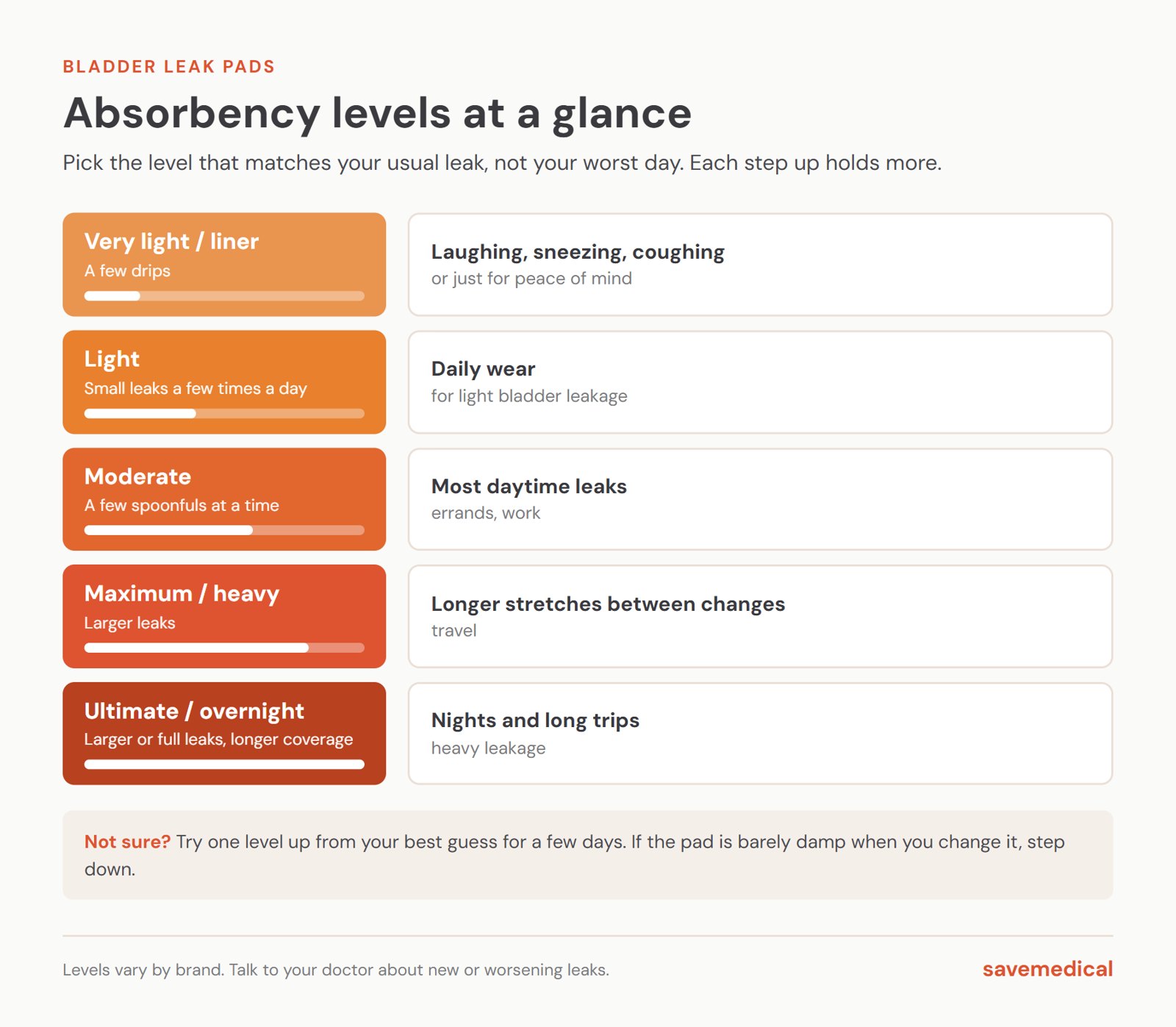
| Level | What it's for | Good for |
|---|---|---|
| Very light / liner | A few drips | Laughing, sneezing, coughing, peace of mind |
| Light | Small leaks a few times a day | Daily wear for light bladder leakage |
| Moderate | A few spoonfuls at a time | Most daytime leaks, errands, work |
| Maximum / heavy | Larger leaks | Longer stretches between changes, travel |
| Ultimate / overnight | Larger or full leaks, longer coverage | Nights, long trips, heavy leakage |
Not sure where you land? Try one level up from your best guess for a few days. If the pad is barely damp when you change it, step down.
Why pads leak (and how to fix it)
Most leaks come from fit, not from the pad being full. Here's how to tell what's going on.
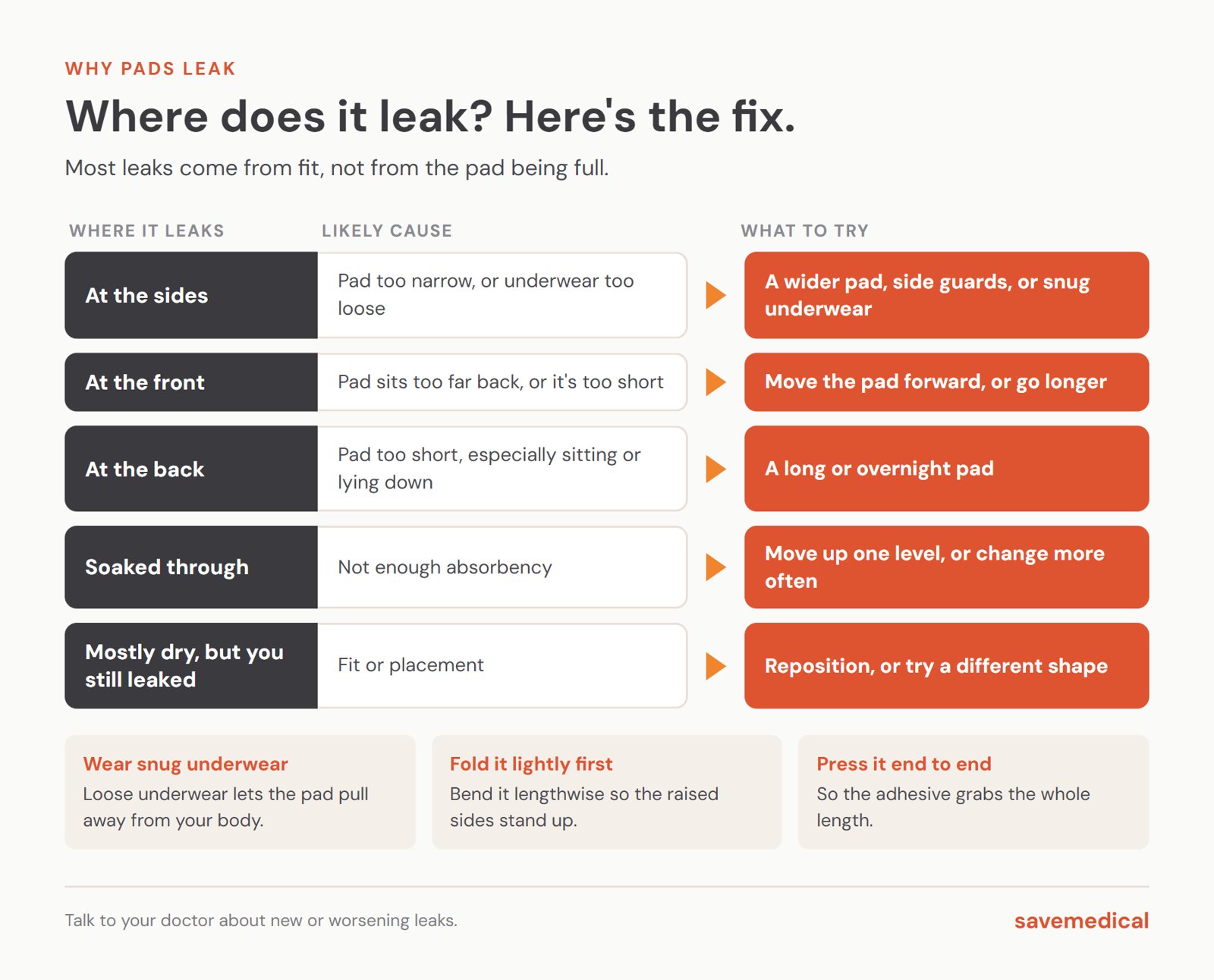
| Where it leaks | Likely cause | What to try |
|---|---|---|
| At the sides | Pad too narrow, or underwear too loose | A wider pad, pads with side guards, or snug-fitting underwear |
| At the front | Pad sits too far back, or it's too short | Move the pad forward, or go longer |
| At the back | Pad too short, especially when sitting or lying down | A long or overnight pad |
| Pad is soaked through | Not enough absorbency | Move up one level, or change more often |
| Pad is mostly dry but you still leaked | Fit or placement | Reposition, or try a different shape |
A few more tips:
- Wear snug underwear. Loose underwear lets the pad pull away from your body. Briefs that fit close keep it in place.
- Fold it lightly before you put it on. Many pads have raised sides that work best when you bend the pad slightly lengthwise first so the sides stand up. Don't shake it out.
- Press it down from end to end so the adhesive grabs the whole length.
Bladder pads vs period pads
They look alike, but they're built for different jobs.
| Bladder leak pad | Period pad | |
|---|---|---|
| Made for | Urine | Period blood |
| How the liquid comes out | Fast, thin, sometimes a lot at once | Slower and thicker, over hours |
| Core | Super absorbent material that turns liquid into a gel and holds it | Absorbent layers made for slower flow |
| Leak barriers | Raised side guards along the edges | Often wings to keep the pad from shifting |
| Odor | Odor control made for urine | Usually unscented or scented |
Can you use a period pad for bladder leaks? In a pinch, yes, for a few drips. But a period pad can't take in a sudden gush fast enough, so liquid can run off the sides. It also holds less. If you leak more than now and then, a bladder pad will work better and you'll change less often.
Can you use a bladder pad for your period? It can work on light days or for spotting. On heavier days, blood tends to stay on the top of the pad instead of soaking in, so it can feel messy. Many people use a period product for their period and a bladder pad on other days. Some use both at once when they leak during their period. For other options, see our guide to alternatives to pads and tampons. If you're shopping after having a baby, our guide to the best pads for postpartum covers both bleeding and bladder leaks.
Pads vs disposable underwear
Pads stick inside your regular underwear. Disposable underwear (also called pull-ups or protective underwear) is the whole garment, with the absorbent part built in.
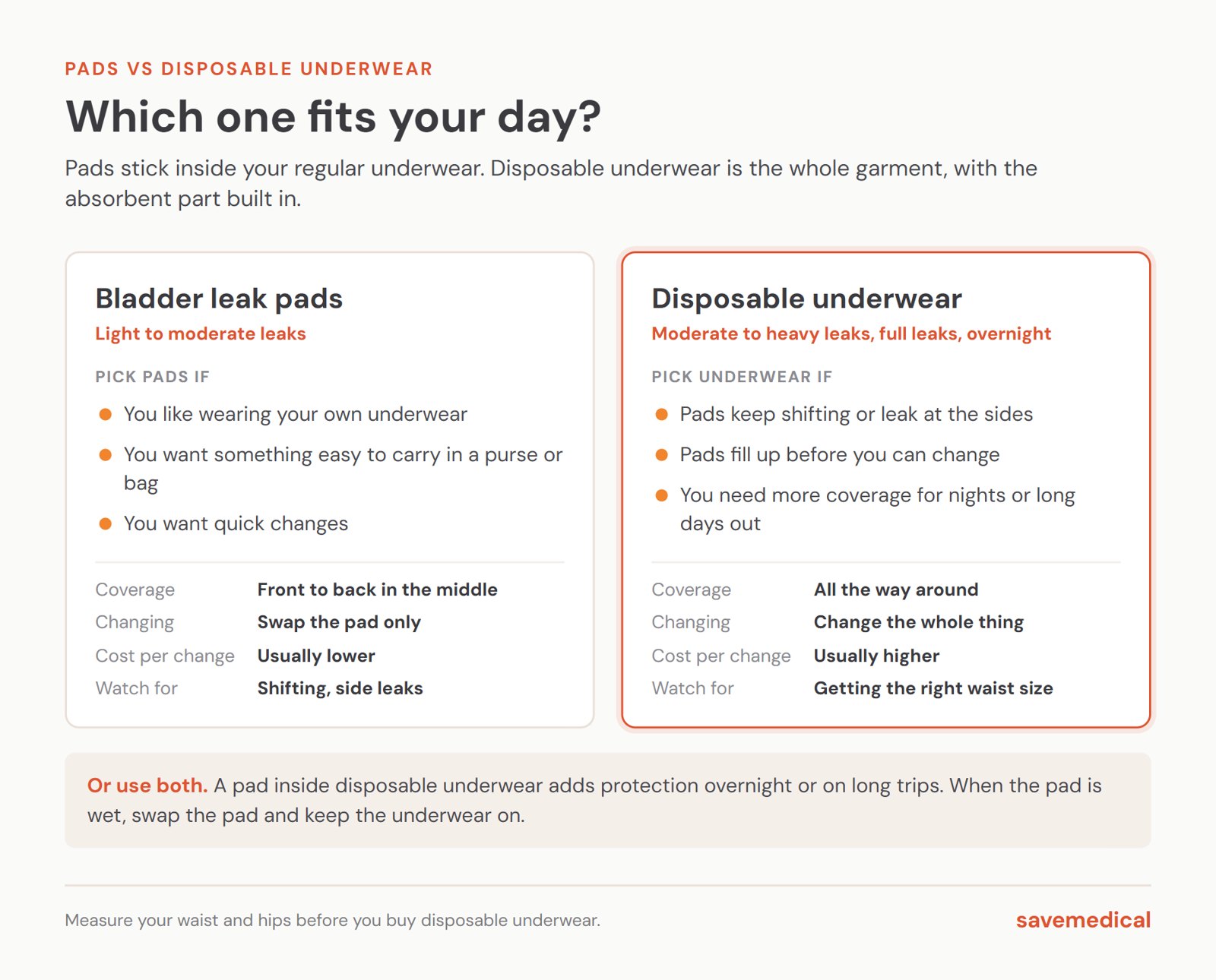
| Bladder leak pads | Disposable underwear | |
|---|---|---|
| Best for | Light to moderate leaks | Moderate to heavy leaks, full leaks, overnight |
| Coverage | Front to back in the middle | All the way around |
| Changing | Swap the pad, keep your underwear on | Change the whole thing |
| Feel | Slim, works with your own underwear | More coverage, can feel warmer |
| Cost per change | Usually lower | Usually higher |
| Watch out for | Shifting, side leaks | Getting the right waist size |
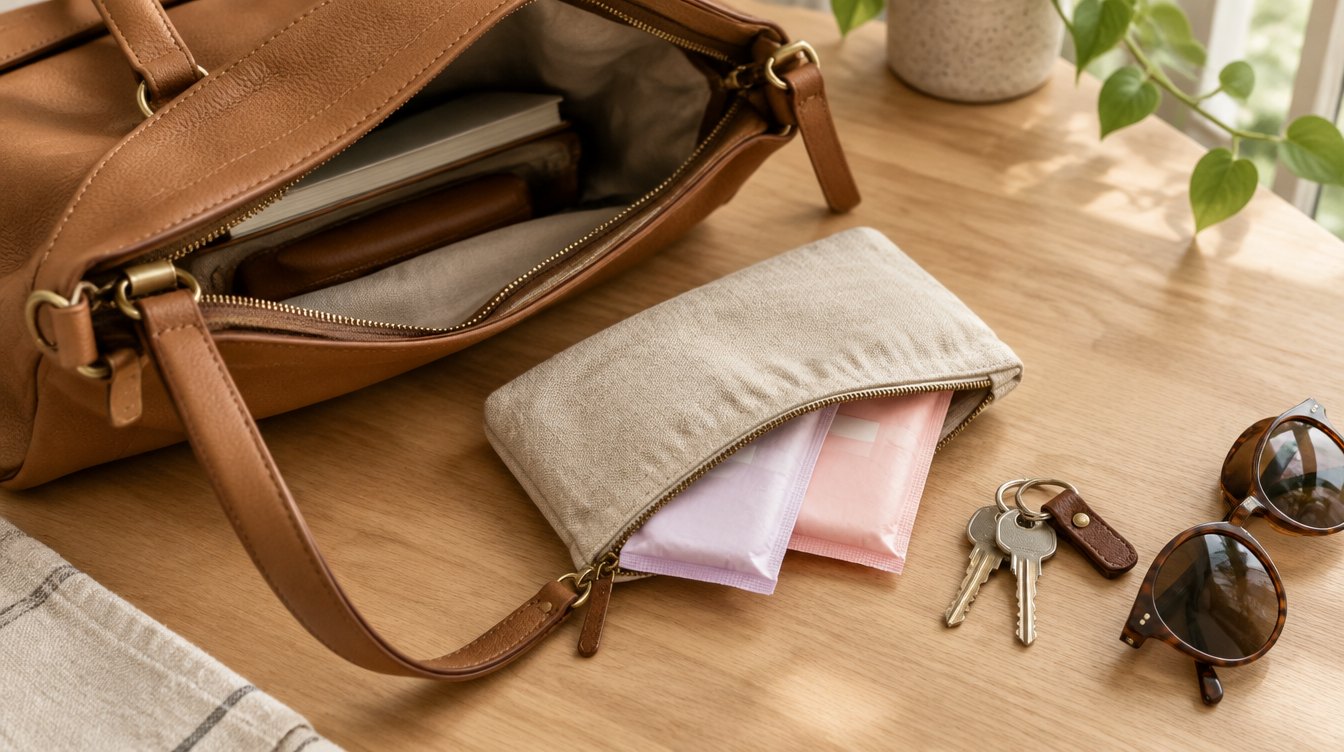
Pick pads if your leaks are light to moderate and you like wearing your own underwear. Pads are easy to carry in a purse or bag and quick to change.
Pick disposable underwear if pads keep shifting, leak at the sides, or fill up before you can change. It's also a common choice for nights and long days out. Measure your waist and hips before you buy, since a loose fit at the legs can lead to leaks.
Or use both. Some people wear a pad inside disposable underwear for extra protection overnight or on long trips. When the pad is wet, you swap the pad and keep the underwear on.
Caring for an older parent? Our guide to the best incontinence products for the elderly covers briefs, pull-ups, and bedding too.
What people say
We read Reddit threads in r/Incontinence and r/Menopause, retailer reviews, and our own customer reviews. A few things came up again and again.
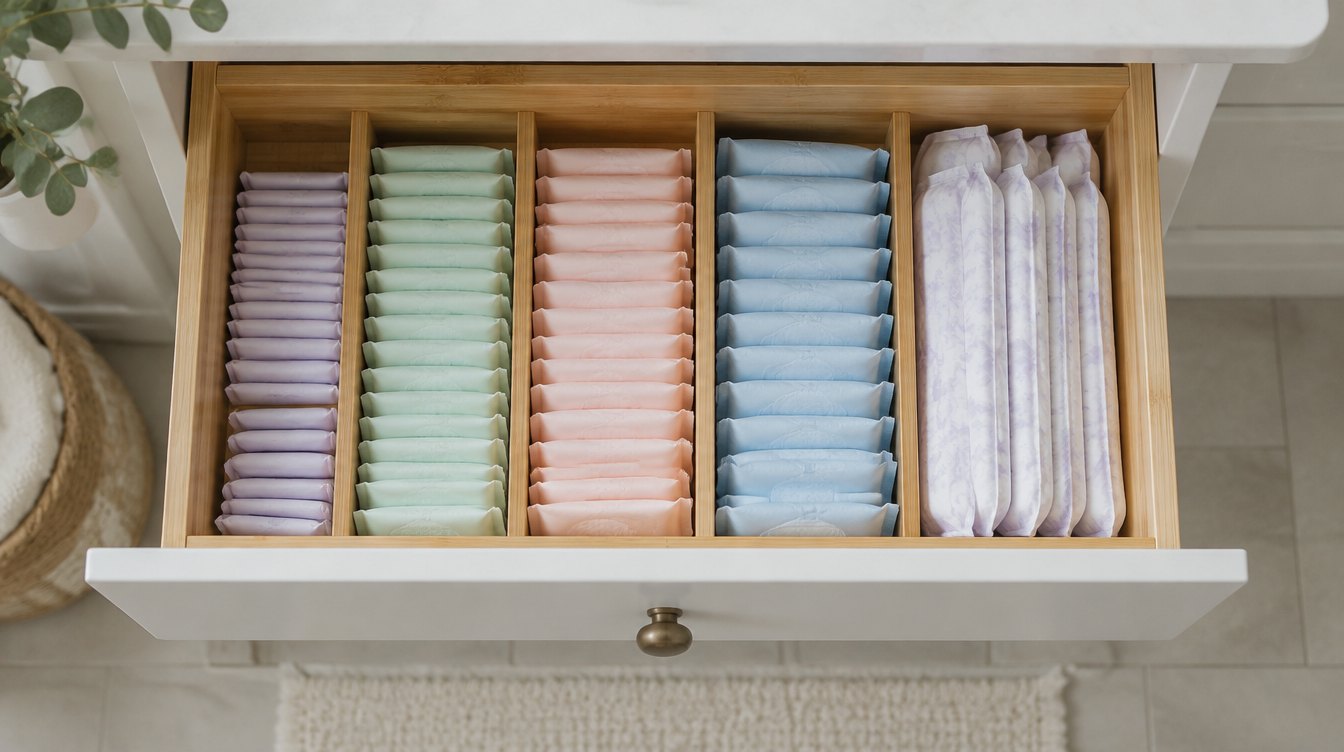
- Side leaks are the top complaint. People blame pads that are too narrow, pads that shift, and loose underwear more than pads that are too small. One of our longtime reviewers said a pad "could be WIDER as leaks always come from sides."
- Length matters more than people expect. Longer pads come up again and again in positive reviews. Overnight and long lengths are popular for coughing, laughing, and travel. A few people find long pads too long for everyday wear.
- It takes trial and error. Reddit users say absorbency ratings don't line up across brands. Many keep two levels at home: a lighter pad for daytime and a heavier one for nights or outings.
- Period pads work for tiny drips, not more. Several people started with liners or period pads and switched once leaks got bigger.
- Pull-ups aren't overkill. People who leak a lot, or can't change often, say disposable underwear is the thing that let them stop worrying about their clothes.
- Poise and Always Discreet come up often on Reddit as reliable everyday pads. Opinions on TENA are mixed. Depend gets better marks for its pull-ups than for its pads.
Our picks
Every product below is in stock on SaveMedical as of October 2026. Nexwear is our own brand.
For drips and light leaks: Prevail Daily Liner Very Light Bladder Control Pad. A 7 inch, individually wrapped liner for small drips. Or try Nexwear Moderate Pads, made for light bladder leakage, in packs of 30 or 90.
For everyday moderate leaks: TENA ProSkin Day Pads. A moderate pad with soft side gathers and individual wrappers. Nexwear Maximum Pads, Regular is our own option for light to moderate leaks.
For heavier daytime leaks: Prevail Daily Pads Maximum in 11 or 13 inch lengths, or Attends Discreet Women's Bladder Control Pads, which come in 10.5 and 14.5 inch moderate and a 15 inch heavy.
For more front to back coverage: Nexwear Maximum Pads, Long. The longer Nexwear pad, for people who leak toward the front or back.
For heavy leaks and nights: Poise Overnight Bladder Control Pads, Prevail Daily Pads Overnight at 16 inches, or Nexwear Ultimate Pads, the highest absorbency in our Nexwear line.
For men: Prevail Daily Male Guards Maximum. A 12 inch guard shaped for men.
When a pad isn't enough: Nexwear Premium Protective Underwear in S/M and L, or browse all disposable underwear and briefs.
Not sure which one fits? Browse the full Incontinence Pads and Liners collection, or call us at 866-420-6997 and a real person will help you sort it out. Free shipping on orders $75+. Applied automatically at checkout.
Frequently asked questions
What are the best bladder leak pads? The best pad is the one that fits your leak level and your body. For drips, try a liner. For everyday leaks, a moderate pad. For heavy leaks or nights, a long maximum or overnight pad. Most people test two or three before they settle.
What's the difference between incontinence pads and period pads? Incontinence pads are made for urine, which comes out fast and thin. They have a core that soaks it up quickly and turns it into a gel, plus raised sides to hold it in. Period pads are made for slower, thicker flow.
Can I use bladder pads for my period? On light days or for spotting, yes. On heavier days, blood tends to sit on top of a bladder pad, so a period product usually works better.
Why do my pads leak at the sides? Usually the pad is too narrow, it has shifted, or your underwear is loose. Try a wider pad with side guards, snug-fitting underwear, or disposable underwear.
Should I use pads or disposable underwear? Pads are a good fit for light to moderate leaks and cost less per change. Disposable underwear gives more coverage for heavy leaks, full leaks, and nights. Some people use a pad inside disposable underwear for long days or overnight.
How many bladder pads will I need? Count how many you use on a normal day and multiply by 30. Buying by the case usually lowers the cost per pad once you've found one you like.

