

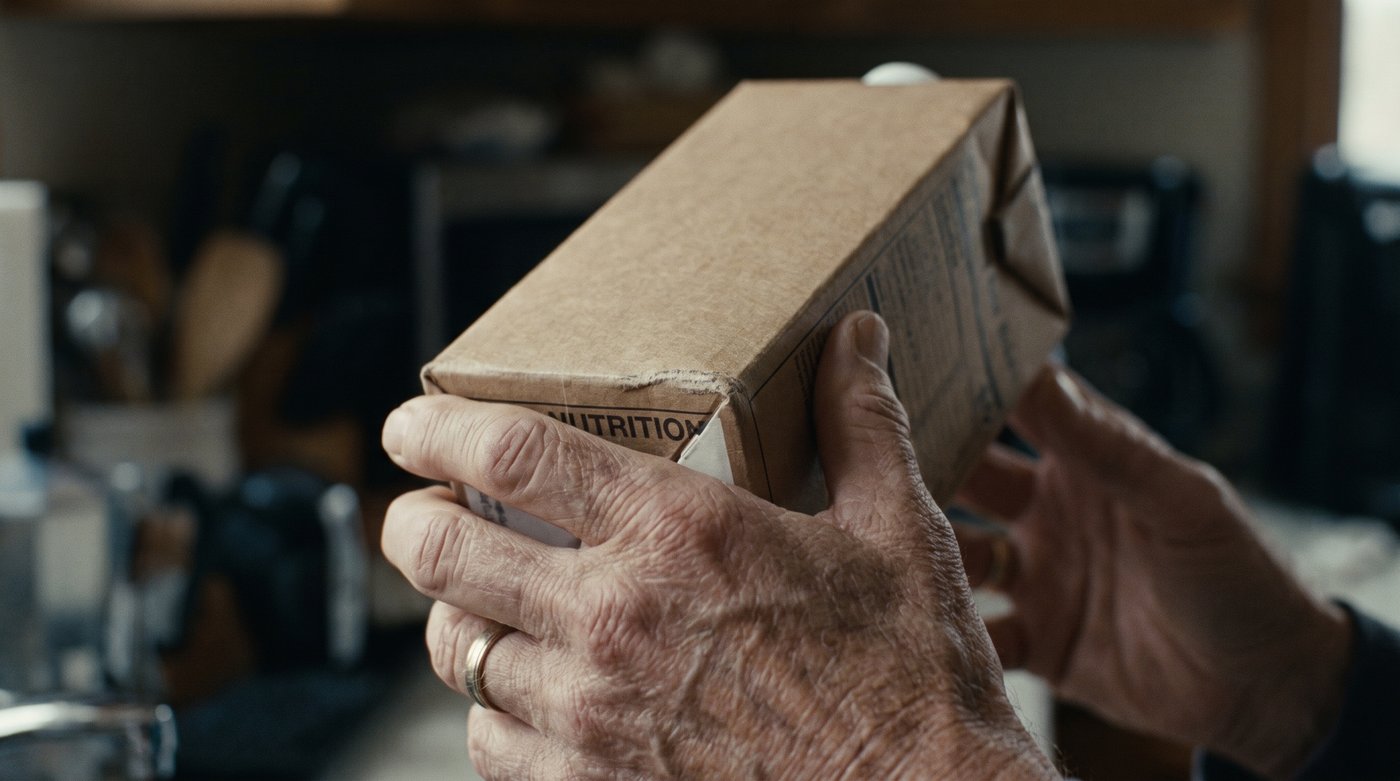
The front of a nutrition carton usually carries a number: 1.0, 1.2, 1.5. Most people assume it is a version number, or a strength, or marketing. It is none of those.
It is calories per milliliter, and it is the single most useful number on the box.
What the number counts
Most cartons hold 237 milliliters, which is 8 fluid ounces. Some hold 250, so check the side panel. Multiply the milliliters in the carton by the number on the front and you have the calories in it.
| On the front | Per milliliter | A 237 mL carton | What that looks like |
|---|---|---|---|
| 1.0 | 1.0 calorie | about 237 calories | The standard. The most common. |
| 1.2 | 1.2 calories | about 285 calories | A step up, same amount to drink. |
| 1.5 | 1.5 calories | about 355 calories | Half as much again, in the same carton. |
| 2.0 | 2.0 calories | about 474 calories | The most concentrated. Less common. |
Notice what is not changing: the amount in the carton. A 1.5 is not a bigger drink. It is the same drink carrying more calories, which matters a lot if finishing a whole carton is hard work. That is usually the reason someone is moved from a 1.0 to a 1.5, and it is worth understanding rather than guessing at.
Whether a particular number suits someone is a question for their doctor or dietitian. We sell the cartons. We are not the right people to decide which one belongs in your kitchen.
Protein is the second number to find
Protein is listed in grams, on the nutrition panel rather than the front, and it varies far more between products than the calorie number does. Two cartons with the same 1.5 on the front can be a long way apart on protein.
If someone has been told to watch protein specifically, that is the figure to compare, and it is worth writing down the number for whatever you currently buy before you compare anything else.
The words on the front, plainly
- "With fiber". Fiber has been added. Some people are told to use these, some are told not to. It is not an upgrade, it is a different product.
- "High protein". The FDA does define it: at least 20% of the daily value per serving. But products clear that bar by very different margins, so check the grams rather than the phrase.
- "Complete" or "balanced". The maker is saying it is formulated to be used as a sole source of nutrition. Whether it should be, for a particular person, is a clinical question.
- "Ready to hang". This one is for tube feeding: the formula comes in a sealed bag that hangs from a feeding pole. Packaging, not formula. It tells you how it is delivered, not what is in it.
How to compare two products without a headache
Compare what actually gets consumed. US labels list nutrition per serving, which is usually one carton. If both cartons are the same size, the panels line up as they are. If one is 237 milliliters and the other is 250, the bigger carton will look a little better on every line simply because there is more in it, so keep the size in mind when you compare.
Then compare three things in this order: calories per carton, grams of protein, and whether fiber is in it. If those three match, you are usually looking at two versions of the same thing.
Where to look on our site
Each product page lists the calorie figure and the protein grams, so you can run that comparison without opening a box. Start with nutrition and feeding for the full range, drinks and shakes if you are buying by the carton, or enteral feeding supplies if you are buying for tube feeding.
And if what you are using is working, the most common mistake is switching because something else looked better on the shelf. Consistency is worth more than a slightly better number.
Reading further
- The FDA explains how nutrition labeling works and what each claim on a package is allowed to mean.
- The Academy of Nutrition and Dietetics runs eatright.org, which has plain-language material and a directory for finding a registered dietitian.
- MedlinePlus, from the National Library of Medicine, is a reliable place to look things up without being sold anything.
The short version
The number on the front is calories per milliliter. Multiply by the milliliters in the carton, usually 237. Check the protein grams separately, because they move independently. Everything else on the front of the box is description, and the decision about which one suits belongs to whoever manages the care.
If you want help comparing two specific products, email us at support@savemedical.com and we will read both labels for you.
