

Most caregivers buy their first pack of underpads based on what was at the pharmacy, then realize three weeks in that they bought the wrong size. Too small and the protection misses the spots that actually need it. Too big and you waste both the pad and your budget. The most common size that comes up in caregiver conversations is 36x36 underpads, but it is not always the right answer.
This guide walks through which size works for which situation. By the end you should know exactly what to order for a bed, a chair, and a wheelchair, and how much to keep on hand.
This guide is about getting the size right. If you are still deciding between disposable and reusable, or working out what absorbency you need, start with how to choose bed underpads.
Quick answer: For most adult beds, use 23x36 underpads for daytime or normal use and 30x36 for nighttime or heavy leaks. Go up to 36x36 for full, queen or king beds, very active sleepers, or heavy overnight leaks. For a wheelchair or dining chair, 17x24 is the standard size. On a bed, the pad should be a few inches wider than the person's torso and reach from upper back to mid-thigh.
What underpads do
An underpad (also called a chux, bed pad, or absorbent pad) is a layered absorbent pad placed under the patient to catch leaks, protect bedding and furniture, and reduce the laundry burden for caregivers. The top layer pulls moisture away from the skin, the middle layer absorbs and locks it in, and the bottom layer is a moisture-proof backing that protects what is beneath.
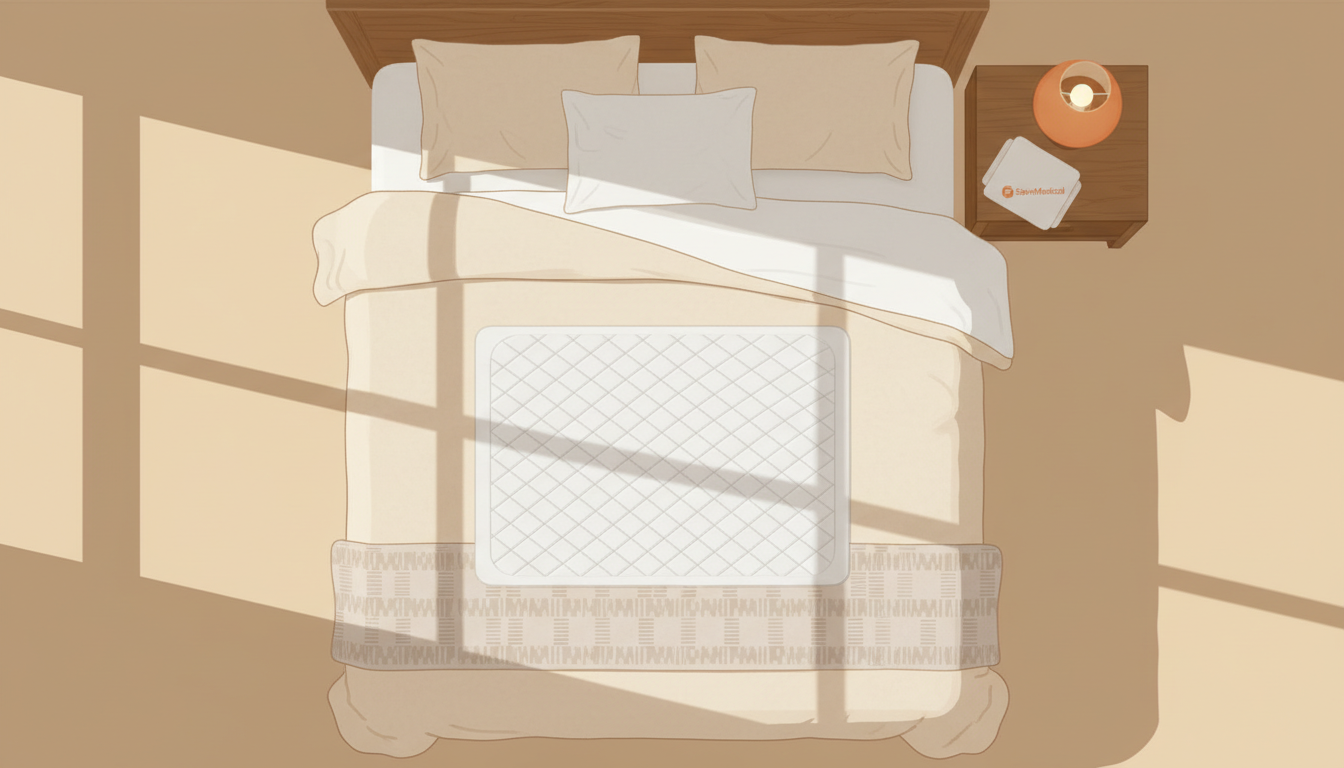
They are used for:
- Incontinence overnight protection
- Daytime chair or wheelchair coverage
- Surgery recovery (drainage)
- Wound care drainage
- Postpartum recovery
- Vomiting or other unexpected fluids
- Pet accidents (different product line, but same idea)
Underpads come in disposable and reusable (washable) versions. Both have their place.
The five common sizes and what they cover

| Size (inches) | Best Used For | Notes |
|---|---|---|
| 17x24 | Chair pads, small lap coverage, kids | Smallest practical size |
| 23x24 | Wheelchair, dining chair, recliner | Tucks under a seated patient |
| 23x36 | Standard bed underpad | The default size for most adult beds |
| 30x30 | Wider bed coverage, side-sleepers who shift | Good middle ground for restless sleepers |
| 30x36 | Higher absorbency, heavier nighttime leaks | Often labeled "overnight" |
| 36x36 | Full bed protection, very active sleepers, multiple-night use | Catches edge cases |
The two sizes you will buy most often are 23x36 for daytime/normal use and 30x36 for nighttime/heavy use. Most caregivers underestimate how often the larger overnight size is needed.
How to pick the right size for a bed

Three questions answer it.
1. How big is the bed?
| Bed Size | Recommended Pad Size |
|---|---|
| Twin (38 inches wide) | 30x36 or 36x36 |
| Twin XL (38 inches wide, 80 long) | 30x36 or 36x36 |
| Full (54 inches wide) | 36x36 (centered) |
| Queen (60 inches wide) | 36x36 (centered) or two 23x36 side by side |
| King (76 inches wide) | 36x36 (centered) or two 30x36 side by side |
| Hospital bed (36 inches wide) | 30x36 or 23x36 |
The goal is for the pad to be a few inches wider than the patient's torso, with enough length to cover from upper back to mid-thigh.
2. How heavy is the leakage?
Light leakage (occasional drips, mostly contained by underwear): 23x36 light absorbency.
Moderate leakage (occasional overnight leaks through underwear): 30x36 moderate to heavy.
Heavy leakage (regular overnight saturation, post-surgery drainage, bowel incontinence): 30x36 or 36x36 with maximum absorbency. Often paired with a second pad underneath as a backup.
3. Does the patient move a lot at night?
Restless sleepers or patients who shift positions frequently need a larger pad than the math suggests, because the wet spot may not be where you expect by morning. Default up one size if the patient is a side-sleeper or a known shifter.
How to pick the right size for a chair
For a dining or living room chair, a 17x24 pad fits the seat without hanging over awkwardly. A 23x24 covers a wider seat if you can find one. The pad goes on the chair, the patient sits on it. Replace as needed.
For a recliner or armchair, 17x24 still works, but many caregivers prefer 30x30 if the patient stays in the chair for hours at a stretch.
For a wheelchair, 17x24 is the standard size. Make sure the bottom (waterproof) layer faces down and the absorbent side faces up.
Disposable vs reusable: which is better?

Both work. The choice depends on volume, laundry capacity, and budget.
| Factor | Disposable | Reusable |
|---|---|---|
| Cost per pad | Lower upfront ($0.30 to $1.50 per pad) | Higher upfront ($10 to $35 per pad) |
| Cost over time | Higher for high-use patients | Lower after about 22 washes |
| Laundry load | None (discard) | Significant (separate hot wash) |
| Absorbency | Moderate to high | High (often higher than disposable) |
| Environmental impact | Higher waste | Lower waste |
| Travel and emergencies | Easier (lightweight, no washing) | Harder (must transport wet pads) |
| Hygiene perception | Generally seen as cleaner | Requires confidence in laundry hygiene |
Most caregivers settle on disposable for the bed (where saturation is most likely) and reusable for the chair (where light coverage is enough). That mix balances cost, laundry burden, and protection.
How many pads to keep on hand
Underestimating supply is the most common mistake. A realistic monthly need:
- Light incontinence (1 bed pad change per night): 30 pads per month
- Moderate (1 pad with possible mid-night change): 45 to 60 pads per month
- Heavy (multiple changes per night plus daytime chair pads): 90 to 120 pads per month
- Post-surgical drainage or wound care: 60 to 90 pads per month, varies
Most disposable underpad packs come in counts of 50, 75, or 150. A monthly subscription of 60 to 100 pads covers most adult overnight needs.
Add 20 percent extra to your estimate for the first two months while you learn the patient's true usage. Running out at 3 AM is much worse than having a closet full of extras.
Common mistakes to avoid
Buying only one size. You will end up using the bed pad as a chair pad (waste) or the chair pad as a bed pad (insufficient coverage). Get two sizes.
Buying the cheapest brand. Low-quality pads bleed through faster than the price difference saves you. The brand difference between McKesson, Prevail, Attends, and Medline is meaningful at the heavy-absorbency end.
Skipping the underpad because underwear is "enough." Even high-quality protective underwear can leak through the leg openings, especially at night. The underpad is the backup that protects the bedding.
Using a regular waterproof sheet plus a towel. Towels are not absorbent at the volumes that matter, and waterproof sheets trap moisture against the skin. Use a proper underpad.
Stocking up at the pharmacy. Pharmacy retail pricing on underpads is often double what online medical supply retailers charge, especially with FSA card on file.
A note on FSA eligibility
Most plans treat underpads as standard incontinence supplies, which usually means a detailed receipt is enough. Some administrators ask for a letter of medical necessity first. Plans differ, so check yours before you buy: your administrator's website normally lists what it covers and what paperwork it wants. We have a fuller guide to what FSA and HSA cover and a printable letter template if your plan turns out to need one. Set up a subscription, put the FSA card on file, and the supplies arrive monthly without thought.
For caregivers managing a parent at home, paying for a recurring supply with pre-tax money is one of the simpler savings available, and how much it comes to depends on your own tax situation. We stock SaveMedical the major brands in the common sizes, with subscription scheduling and FSA cards accepted at checkout.
Frequently asked questions
What size underpad do I need for a hospital bed?
A standard hospital bed is 36 inches wide and 80 inches long. The best fit is a 30x36 underpad (covers from upper back to mid-thigh on most adults) or a 36x36 for wider coverage. For very tall patients, two 23x36 pads stacked end-to-end give full body length protection.
Are 36x36 underpads worth the extra cost?
For most adult beds and most adults, 30x36 is sufficient. The 36x36 size is worth it specifically for full-size or queen beds, very active sleepers who shift positions overnight, or heavy nighttime leakage requiring extra-wide catch zones. Otherwise, 30x36 saves money without giving up much protection.
Can I cut a larger pad to size?
No. Cutting through the layers destroys the moisture-proof backing and the absorbent core, leading to leaks. Buy the size you need.
How often should I change an underpad?
As soon as it is soiled. Even a small amount of saturation reduces the pad's protective function for the next leak. Plan on at least one change per night for moderate incontinence, more if the patient is restless or has bowel incontinence.
Are reusable underpads cost-effective?
Yes, past about 22 washes. At roughly $15 for a reusable pad and $0.70 for a disposable, that is where the two even out. After that, the reusable is pure savings. The catch is the laundry burden.
Can I use baby changing pads as underpads?
No. Baby changing pads are too small (about 16x22 inches), and the absorbent material is designed for much smaller volumes. Use adult-sized underpads designed for incontinence.
Putting together your underpad supply
For most caregivers, the right setup is: 50 to 75 disposable 30x36 overnight pads per month for the bed, plus a few reusable 17x24 pads kept by the recliner or wheelchair. Subscribe to the recurring delivery and you stop thinking about it.
Browse the underpads collection to compare sizes, brands, and absorbencies, or the wider incontinence range if you need protective underwear on the same delivery.
Shop these at SaveMedical
- McKesson Ultra Heavy Absorbency Underpad
- SPC Super Absorbent Quilted Underpad
- Simplicity Basic Disposable Underpad
Free shipping on orders $75+. Not sure which one fits? Email care@savemedical.com.