

Pelvic floor exercises, often called Kegels, are small squeezes you can do almost anywhere. No equipment, no gym, and nobody can tell you're doing them. This guide shows you how to find the right muscles, a simple routine to start with, and the mistakes that trip most people up.
The quick answer
- Your pelvic floor is a group of muscles at the bottom of your pelvis. They help support the bladder and bowel. Women and men both have them.
- To find them, squeeze as if you're trying to hold in gas. A gentle lift or "pulling" feeling means you've got the right muscles.
- A good starting routine: squeeze for 3 seconds, relax for 3 seconds, 5 to 10 times, morning and night. Over a few weeks, build up to 5-second holds and 3 sets a day of 10 to 15 squeezes.
- Breathe normally. Keep your stomach, thighs, and buttocks relaxed.
- Give it time. NIH says many people don't notice a change in bladder control until 3 to 6 weeks in.
- Kegels aren't right for everyone. If you have pain, or leaks aren't getting better, ask your doctor about a pelvic floor physical therapist.
What is the pelvic floor?
Think of the pelvic floor as a sling of muscle that runs from your pubic bone in front to your tailbone in back. It holds up the bladder and bowel, and in women, the uterus too.
Like other muscles, the pelvic floor can get weaker over time. NIH lists pregnancy and childbirth, surgery, and getting older as common reasons. Cleveland Clinic adds being overweight, long-term coughing or straining, and high-impact exercise. When these muscles are weak, small leaks can happen when you laugh, cough, sneeze, or lift something.
Pelvic floor exercises work these muscles the same way you'd work any other muscle: squeeze, hold, relax, repeat. Mayo Clinic and NIH both say they may help with bladder control.
How to find the right muscles
This is the hardest part for most beginners, so take your time. Try one of these:
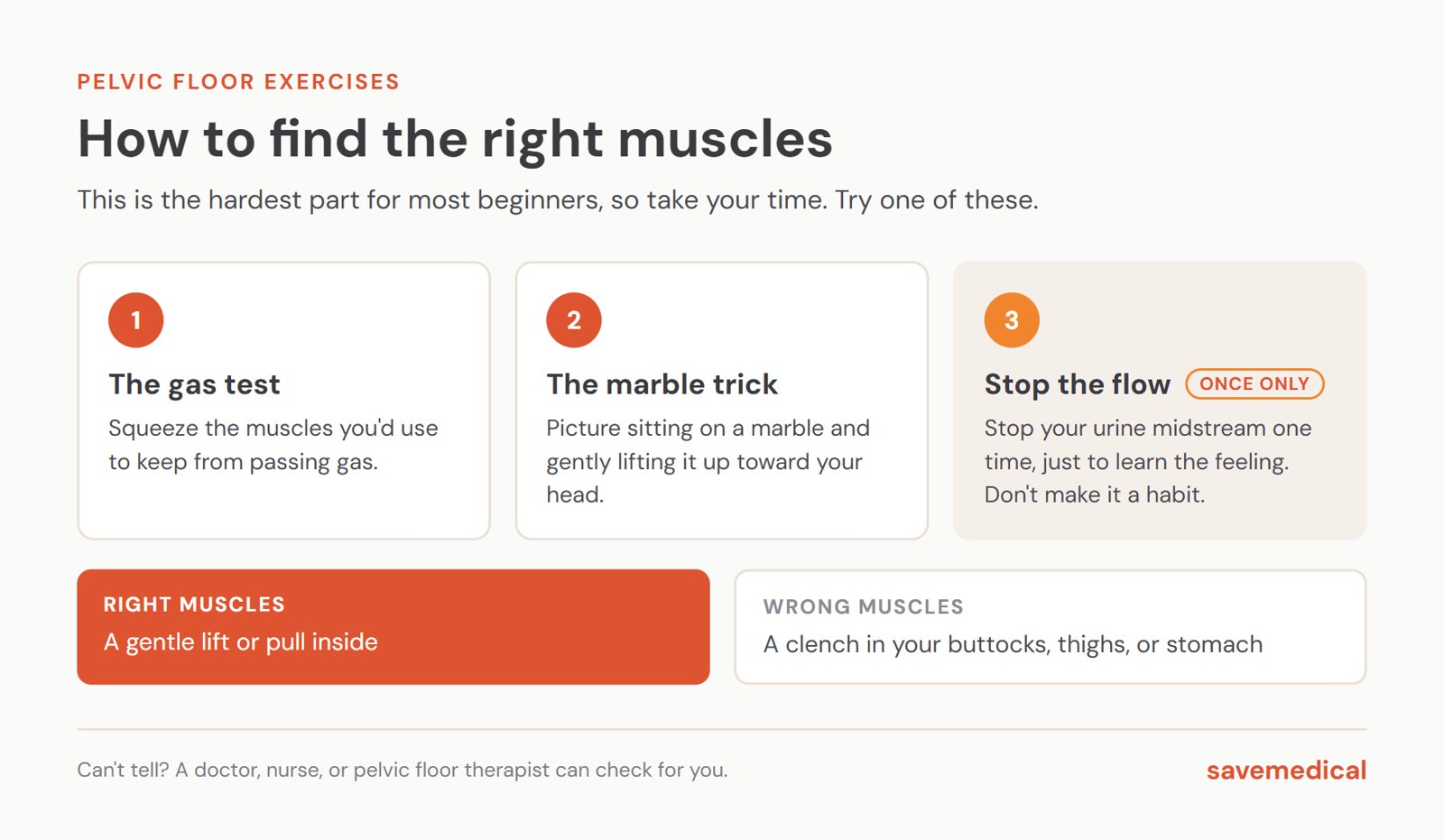
- The gas test. Squeeze the muscles you'd use to keep from passing gas. You should feel a lift or pull inside, not a clench in your buttocks.
- The marble trick. Mayo Clinic suggests picturing that you're sitting on a marble and gently lifting it up toward your head.
- The finger check. Women can place a clean finger in the vagina and squeeze. Men can do the same at the anus. A feeling of tightness around your finger means you're using the right muscles. This is from NIH and Mayo Clinic.
- The bathroom test (once only). You can try stopping your urine midstream one time just to learn the feeling. Don't make it a habit. NIH and Cleveland Clinic both warn that doing this regularly can raise the risk of a bladder infection.
If you can't tell whether you've found them, that's normal. A doctor, nurse, or pelvic floor therapist can check for you.
A beginner routine
This routine follows the guidance from Mayo Clinic, Cleveland Clinic, and NIH. Start small and build up slowly.
- Get comfortable. Lie on your back with your knees bent. Cleveland Clinic says lying down is the easiest place to start if your muscles are weak.
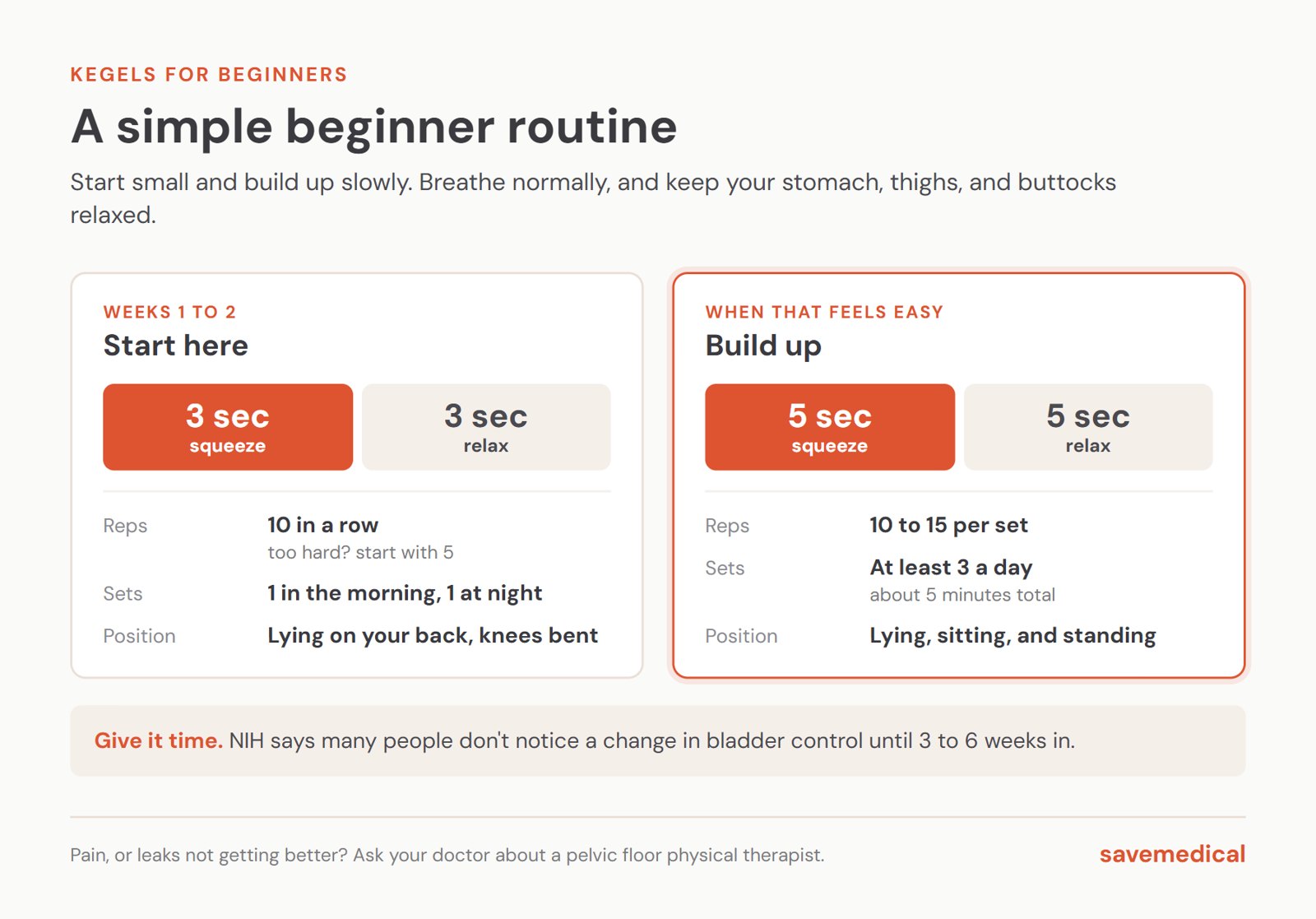
- Squeeze and lift your pelvic floor muscles. Hold for 3 seconds.
- Relax completely for 3 seconds. The relax is just as important as the squeeze.
- Repeat 10 times. If 10 is too hard, start with 5. That's one set.
- Do 1 set in the morning and 1 at night for the first week or two.
- Build up. When that feels easy, Cleveland Clinic suggests moving to 5-second holds with 5 seconds of rest. Mayo Clinic and NIH suggest working up to 10 to 15 squeezes per set.
- Aim for at least 3 sets a day. NIH says that's about 5 minutes total.
- Change positions. Once lying down feels easy, try sitting and standing too. NIH says practicing in all three positions makes the muscles strongest.
Want to add quick squeezes? Cleveland Clinic also suggests short 1-second squeezes. Do four quick ones, then hold the fifth for 5 seconds.
Tip: Tie your Kegels to something you already do every day. Mayo Clinic suggests fitting them into daily tasks. Many people do a set while the coffee brews, at red lights, or during TV commercials. A simple checklist on the fridge helps too. NIH suggests keeping a daily log.
Squeeze before you sneeze
Once you can find and hold the muscles, you can put them to work. Cleveland Clinic calls this "the knack." Do a quick, strong squeeze right before you cough, sneeze, laugh, or lift. Mayo Clinic gives the same advice: squeeze just before and during anything that puts pressure on your stomach.
This is most useful for leaks that happen with pressure, like a sneeze. Leaks that come with a sudden, strong urge to go are a different issue. Your doctor can tell you which kind you have and what to try.
Other moves that use the pelvic floor
Cleveland Clinic describes a few simple moves that pair a pelvic floor squeeze with a familiar exercise. Only try these once regular Kegels feel easy, and skip anything that hurts.
- Bridge. Lie on your back, knees bent, feet flat. Lift your hips, squeeze your pelvic floor, and hold for a few seconds. Lower slowly and relax.
- Squat. Squeeze your pelvic floor as you lower down, and let it go as you stand back up. A chair behind you is a good safety net.
- Cat-cow. On your hands and knees, let your belly drop as you breathe in. Round your back and squeeze your pelvic floor as you breathe out.
If you have back, hip, or knee problems, check with your doctor before adding new exercises.
Common mistakes
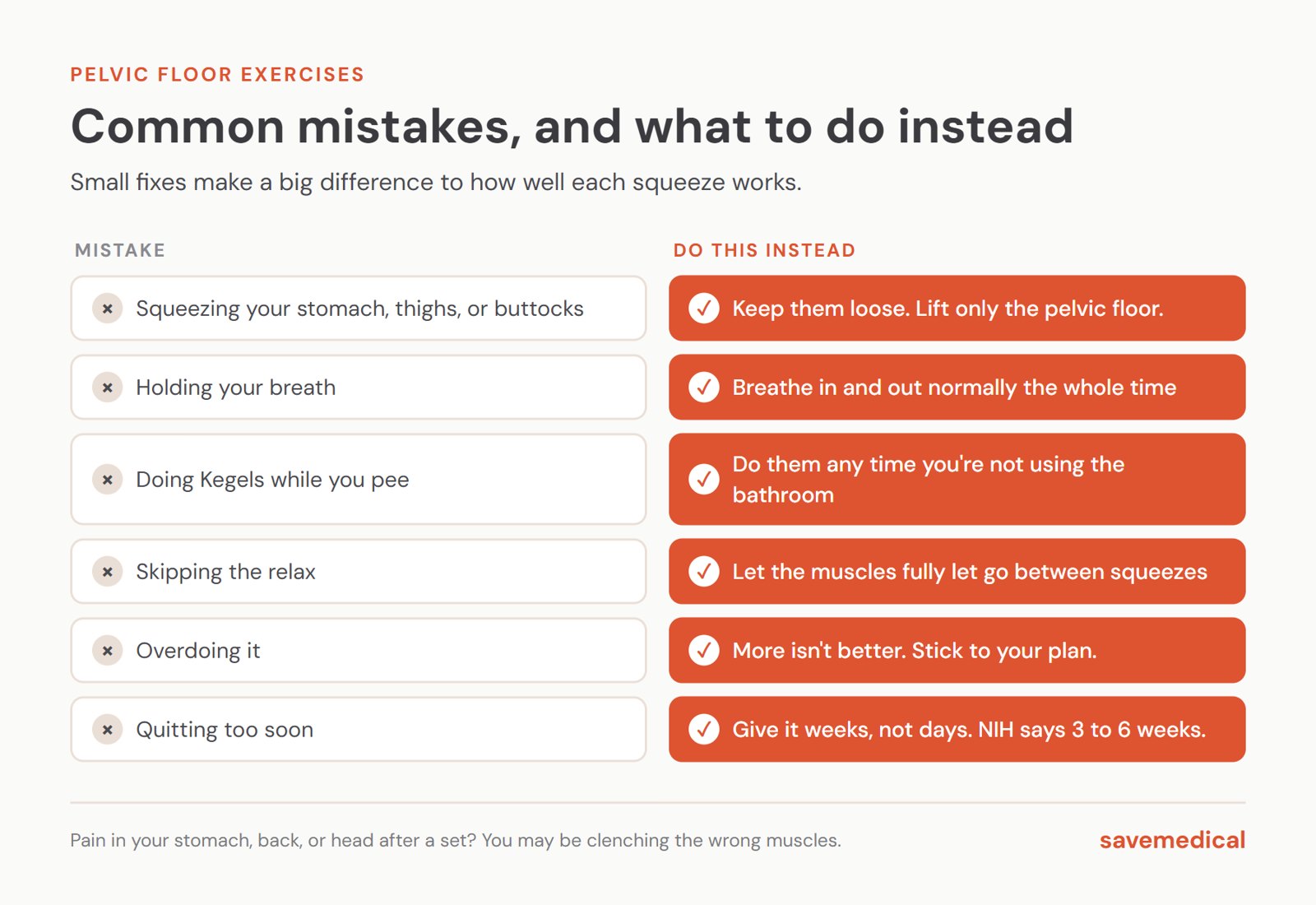
- Squeezing the wrong muscles. Your stomach, thighs, and buttocks should stay loose. NIH says tensing them can put more pressure on the bladder. Cleveland Clinic says pain in your stomach, back, or head after a set is a sign you're clenching the wrong muscles.
- Holding your breath. Breathe in and out normally the whole time.
- Doing Kegels while you pee. Mayo Clinic says this can keep your bladder from emptying all the way.
- Skipping the relax. Let the muscles fully let go between each squeeze.
- Overdoing it. More isn't better. Cleveland Clinic says doing too many can make the muscles too tight. NIH says it can cause straining when you use the bathroom. Stick to your plan.
- Quitting too soon. Results take weeks, not days. NIH says 3 to 6 weeks. Cleveland Clinic says about 6 to 8 weeks. Mayo Clinic says a few weeks to a few months.
While you build strength
Building strength takes time, and leaks don't wait. Many people use a light pad in the meantime so they can go about their day without worry. If you're not sure where to start, our guide to the best bladder leak pads walks through absorbency and fit. You can also browse all incontinence pads and liners. Questions? Call us at 866-420-6997 and a real person will help.
Habit tip
Tie your Kegels to something you already do every day. Many people do a set while the coffee brews, at red lights, or during TV commercials. A simple checklist on the fridge helps too.
When to get help
Kegels are a simple place to start, but they aren't the right fit for everyone. Some people have pelvic floor muscles that are too tight, not too weak. Cleveland Clinic says strengthening exercises can make symptoms worse for them. You can read more in our post on a hypertonic pelvic floor.
Talk to your doctor before you start if you have pelvic pain, have had pelvic surgery, or are pregnant or recently gave birth. And check in if:
- You can't tell whether you're squeezing the right muscles
- Kegels cause pain or discomfort
- You've been consistent for a couple of months and see no change
If you have pain, or leaks aren't getting better, ask your doctor about a pelvic floor physical therapist. NIH says a therapist trained in pelvic floor therapy can check your technique and help you get the most out of your exercises. They may also use tools like biofeedback to help you find the right muscles.
Frequently asked questions
Can men do pelvic floor exercises? Yes. Men have pelvic floor muscles too, and the routine is the same. Mayo Clinic and NIH both have guidance for men. To find the muscles, men can squeeze as if stopping gas or use the finger check at the anus.
How many Kegels should I do a day? Start with 1 set of 5 to 10 squeezes, morning and night. Build up to at least 3 sets a day of 10 to 15 squeezes. That's about 5 minutes a day in total.
How long until I notice a difference? It varies. NIH says 3 to 6 weeks, Cleveland Clinic says about 6 to 8 weeks, and Mayo Clinic says a few weeks to a few months. Sticking with it every day matters most.
Can I do Kegels sitting at my desk or in the car? Yes. Once you can find the muscles lying down, you can do them sitting or standing. Nobody will be able to tell.
Is it bad to stop my pee midstream to practice? Only do it once or twice to learn which muscles to use. Doing it often can raise the risk of a bladder infection and may keep your bladder from emptying all the way.
What if Kegels make things worse? Stop and talk to your doctor. Your muscles may be too tight rather than too weak, and a pelvic floor physical therapist can help figure out what's going on.
This article is for general information only. It isn't medical advice. Talk with your doctor about what's right for you.
Shop these at SaveMedical
- Nexwear Ultimate Pads
- Nexwear Maximum Pads, Long
- Nexwear Moderate Pads
- Nexwear Premium Protective Underwear
Free shipping on orders $75+. Not sure which one fits? Email care@savemedical.com.

