

Quick answer: Kate Farms Pediatric Standard 1.2 is a plant-based, USDA Organic formula made with pea protein and without dairy or soy. PediaSure 1.5 Cal is a milk- and soy-based formula with more calories and protein packed into a slightly smaller can. Both are made for kids ages 1 to 13 and can be used by mouth or through a feeding tube, so the right pick usually comes down to allergens, calorie needs and what your child's care team prefers.
These are medical nutrition products. Use them under the guidance of your child's doctor or dietitian, and don't switch formulas without checking with them first.
If you're comparing these two, you've probably already been handed one by a clinic, or you're wondering if the other one is worth asking about. Below is a plain side-by-side of what's in each carton, a short look at a third option (Compleat Pediatric Organic Blends), what other parents say, and how to buy by the case.
Side-by-side comparison
All numbers are per single carton, can or pouch, taken from each manufacturer's product page in October 2026. Formulas change, so always check the label on the box you have.
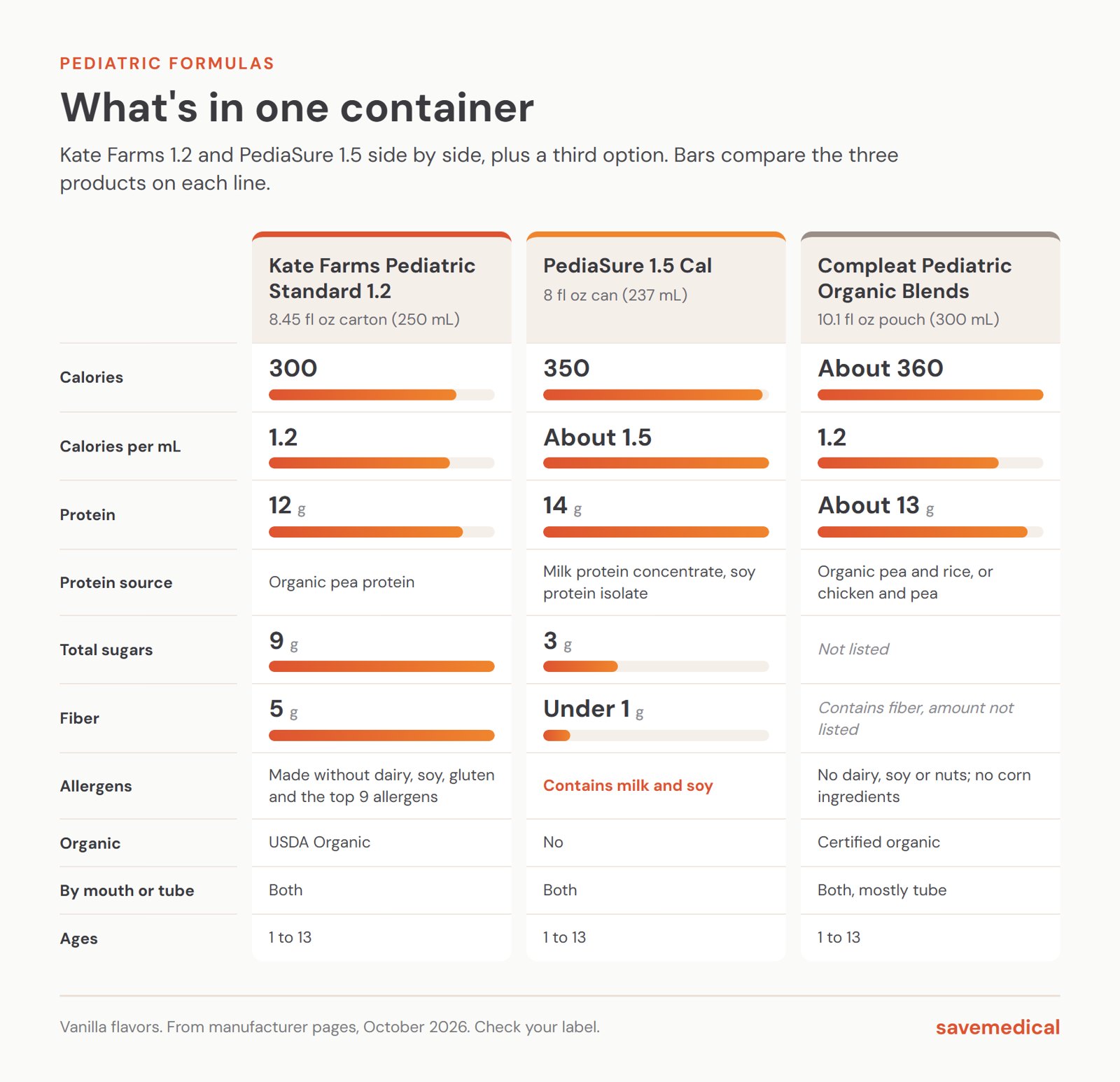
| Kate Farms Pediatric Standard 1.2 (Vanilla) | PediaSure 1.5 Cal (Vanilla) | Compleat Pediatric Organic Blends | |
|---|---|---|---|
| Container size | 8.45 fl oz carton (250 mL) | 8 fl oz can (237 mL) | 10.1 fl oz pouch (300 mL) |
| Calories | 300 | 350 | 360 |
| Calories per mL | 1.2 | About 1.5 | 1.2 |
| Protein | 12 g | 14 g | About 13 g |
| Protein source | Organic pea protein | Milk protein concentrate, soy protein isolate | Organic pea and rice protein (Plant-Based); chicken and pea protein (Chicken-Garden) |
| Total sugars | 9 g | 3 g | Not listed on Nestle's product page |
| Fiber | 5 g | Less than 1 g | Contains fiber (amount not listed) |
| Key allergens | Made without dairy, soy, gluten and the top 9 allergens | Contains milk and soy | No dairy, soy or nuts; no corn ingredients |
| Organic | USDA Organic | No | Certified organic |
| By mouth or tube | Both | Both | Both (mostly used for tube feeding) |
| Ages | 1 to 13 | 1 to 13 | 1 to 13 |
A few things jump out:
- Calorie density is the biggest difference. PediaSure 1.5 gives about 50 more calories in a smaller can. Kate Farms 1.2 and Compleat Pediatric are both 1.2 calories per mL.
- Protein source is the next one. Kate Farms and Compleat are plant-based. PediaSure 1.5 uses milk and soy.
- Sugar and fiber run in opposite directions. PediaSure 1.5 lists 3 g of sugar and almost no fiber. Kate Farms 1.2 lists 9 g of sugar and 5 g of fiber.
Kate Farms Pediatric Standard 1.2
Kate Farms Pediatric Standard 1.2 is a plant-based formula in an 8.45 fl oz carton. The vanilla carton has 300 calories, 12 g of protein from organic pea protein, 5 g of fiber and 9 g of total sugars. It's USDA Organic and Non-GMO Project Verified, and Kate Farms says it's made without dairy, soy, gluten and the top 9 allergens.
It comes in vanilla and chocolate. Kids can drink it, or it can go through a feeding tube. Kate Farms says its formulas flow through a tube as small as 6.5 French.
Good to know: Kate Farms uses intact pea protein in its Standard formulas. If your child's care team wants a peptide (broken-down protein) formula instead, Kate Farms makes a separate Pediatric Peptide 1.5.
Shop Kate Farms Pediatric Standard 1.2 Vanilla, case of 12
PediaSure 1.5 Cal
PediaSure 1.5 Cal from Abbott comes in an 8 fl oz can. Each can has 350 calories, 14 g of protein, 3 g of total sugars and less than 1 g of fiber. The protein comes from milk protein concentrate and soy protein isolate, so it contains milk and soy. It isn't organic.
Abbott labels it for oral or tube feeding for kids ages 1 to 13. It's sold in vanilla, 24 cans to a case.
Good to know: PediaSure 1.5 is a different product from the PediaSure shakes you see in grocery stores. It's more concentrated. If your child's care team has asked for a peptide formula, Abbott makes PediaSure Peptide 1.5, which uses broken-down milk protein.
Shop PediaSure 1.5 Cal Vanilla, case of 24
Compleat Pediatric Organic Blends: a third option
Compleat Pediatric Organic Blends from Nestle Health Science is a real food formula in a 10.1 fl oz (300 mL) pouch. At 1.2 calories per mL, each pouch has about 360 calories. Nestle lists protein at 15% of calories, which works out to about 13 g per pouch.
It comes in two blends:
- Plant-Based: organic sweet potato, brown rice, hydrolyzed pea protein and rice protein
- Chicken-Garden: organic dark meat chicken, brown rice and hydrolyzed pea protein
Nestle says it has no dairy, soy, nut or other common food allergens and no corn ingredients. It's certified organic and can be used for tube feeding or taken by mouth, though most families use it through a tube.
Parents often look at Compleat Pediatric when they want food-based ingredients but don't want to make blended meals at home.
Shop Compleat Pediatric Organic Blends Plant-Based, case of 24
What parents say
We read through parent discussions on Reddit (r/feedingtube, r/specialneedsparenting, r/toddlers and r/Parenting) and retailer reviews. Here's what came up most. These are personal experiences, not advice, and every child is different.

- Taste is a coin flip. Parents often describe PediaSure as very sweet. Kate Farms is usually called less sweet. Some kids happily drink the vanilla, and one parent compared it to melted vanilla ice cream. Other kids refuse it outright. Several parents say both taste better cold.
- Some families switched because of dairy. Parents with kids who don't do well with milk often mention Kate Farms or Compleat as the plant-based option they moved to, with their care team's help.
- Stomach changes go both ways. One parent said things settled down after moving off PediaSure. Another said Kate Farms Chocolate caused real constipation. Parents agree that what works for one child may not work for another.
- Kate Farms can thicken in the fridge. Tube-feeding parents say cold Kate Farms runs thicker, and a few linked clogs to refrigerated leftovers. Shaking well and flushing the tube often came up again and again. Ask your care team before changing how you prepare any feed.
- Insurance coverage is all over the map. Some families get Kate Farms or PediaSure covered through a doctor's prescription and a home medical supplier. Others had coverage denied, or approved and later reversed. It depends on your plan, your state, whether your child is tube-fed and the paperwork from your provider.
- Shipping condition matters. In retailer reviews, the most common PediaSure complaint was dented or damaged cases. Kate Farms reviews talked more about taste.
Switching formulas: questions to ask your care team
If you're thinking about moving from one formula to another, bring these questions to your child's doctor or dietitian:
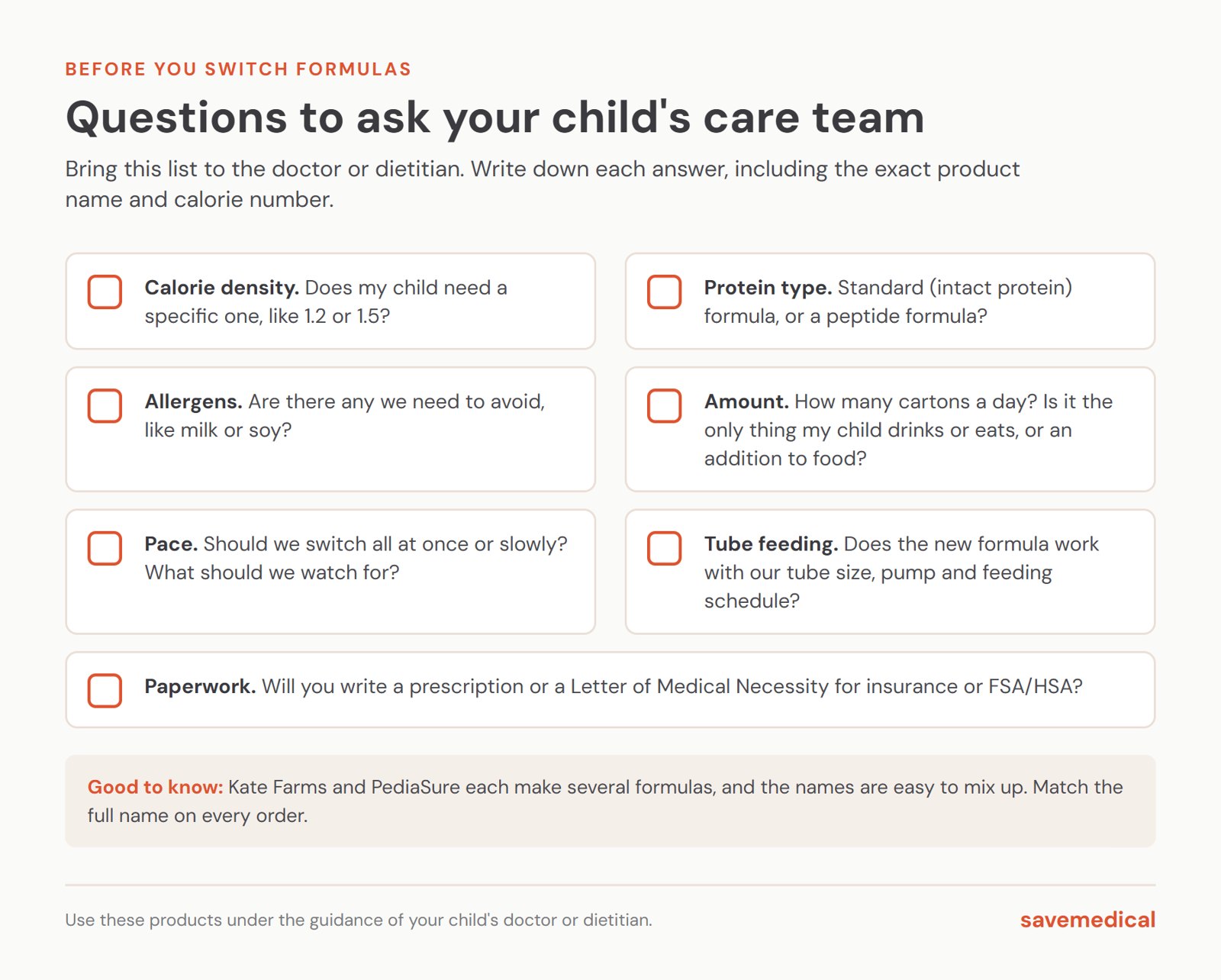
- Does my child need a specific calorie density, like 1.2 or 1.5?
- Is a standard (intact protein) formula right, or do they want a peptide formula?
- Are there allergens we need to avoid, like milk or soy?
- How many cartons a day, and is this the only thing my child drinks or eats, or an addition to food?
- Should we switch all at once or slowly? What should we watch for?
- For tube feeding, does the new formula work with our tube size, pump and current feeding schedule?
- Will you write a prescription or a Letter of Medical Necessity for insurance or FSA/HSA?
Write down the answers, including the exact product name and calorie number. "Kate Farms" and "PediaSure" each make several formulas, and the names are easy to mix up.
Buying by the case and Autoship
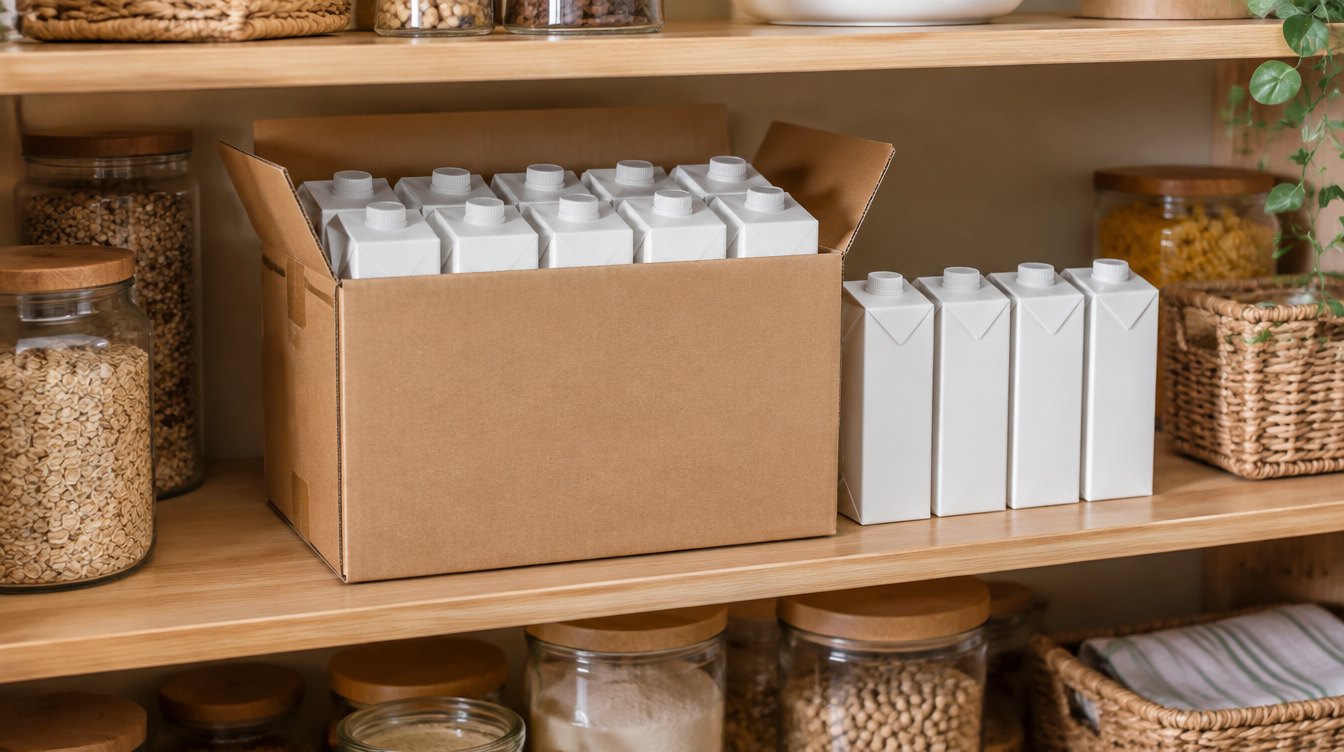
Most families go through these formulas quickly, so buying by the case usually makes sense.
Parent tip
Order before you're down to your last few cartons, and check dates when the case arrives. Rotate older cartons to the front.
- Kate Farms Pediatric Standard 1.2: case of 12 cartons
- PediaSure 1.5 Cal: case of 24 cans
- Compleat Pediatric Organic Blends: case of 24 pouches
A few tips from what parents share:
- Order before you're down to your last few. Keeping some extra on hand means a late delivery is less stressful.
- Check dates when the case arrives. Rotate older cartons to the front.
- Stick to the same product name. It's easy to grab a similar box with a different calorie number.
Autoship, our automatic delivery program, lets you set a delivery schedule on eligible items and save 5%. You can skip, change or cancel anytime.
Free shipping on orders $75+. Applied automatically at checkout.
Use your FSA or HSA. Many nutrition and tube feeding products qualify. Some require a Letter of Medical Necessity from your provider.
You can browse all of our feeding products, plus tubes, bags and other enteral feeding supplies. Questions? Call us at 866-420-6997.
FAQ
Is Kate Farms 1.2 the same as PediaSure 1.5? No. Kate Farms Pediatric Standard 1.2 is plant-based, organic and made without dairy or soy, with 300 calories per 8.45 fl oz carton. PediaSure 1.5 Cal uses milk and soy protein and has 350 calories per 8 fl oz can. Talk to your child's care team before switching between them.
Can my child drink Kate Farms Pediatric 1.2, or is it only for tube feeding? Both. Kate Farms labels it for drinking or tube feeding for kids ages 1 to 13. PediaSure 1.5 and Compleat Pediatric Organic Blends are also labeled for either use.
Does PediaSure 1.5 have dairy? Yes. Abbott's label says it contains milk and soy ingredients. Kate Farms Pediatric 1.2 and Compleat Pediatric Organic Blends are both made without dairy and soy.
Which has more sugar, Kate Farms 1.2 or PediaSure 1.5? On the current labels, the vanilla Kate Farms Pediatric 1.2 carton lists 9 g of total sugars and the PediaSure 1.5 Cal can lists 3 g. Kate Farms 1.2 also has 5 g of fiber, while PediaSure 1.5 has less than 1 g.
Will insurance cover Kate Farms or PediaSure? Sometimes. Coverage depends on your plan, your state's Medicaid or WIC rules, whether your child is tube-fed and the paperwork from your child's provider. Many families buy through a home medical supplier when it's covered and pay out of pocket when it isn't.
What size case do these come in? At SaveMedical, Kate Farms Pediatric Standard 1.2 comes in a case of 12 cartons, PediaSure 1.5 Cal comes in a case of 24 cans and Compleat Pediatric Organic Blends comes in a case of 24 pouches.
Product details come from the manufacturers' websites as of October 2026: Kate Farms, Abbott Nutrition and Nestle Health Science. Always check the label on your product for the most current information.

