

Nobody plans for the storage. You work out what you need, you order a month of it, and then a month of it arrives and you realize a case of pads is roughly the size of a suitcase.
Three cases is furniture. This is the part of the job nobody warns you about, and there are a few things that genuinely help.
Split it: a week out, the rest away
The single most useful habit is keeping about a week's worth where it is actually used, and the rest somewhere else entirely.
It sounds obvious written down. In practice most households do the opposite, keeping everything in one place and carrying things back and forth, or keeping everything in the bathroom until the bathroom is unusable. A week by the bed or in the bathroom, the bulk in a closet or under the bed, and the whole thing stops feeling like it has taken over.
Where the bulk should go
- High, not deep. A top closet shelf works well for things you reach for once a week. A deep cabinet does not, because whatever goes to the back is forgotten and ages there.
- Under the bed is better than people expect. Flat, out of sight, and the right shape for cases. A shallow plastic box on wheels makes it workable.
- Avoid the bathroom for bulk. Humidity is hard on cardboard and paper packaging over weeks. One pack in the bathroom is fine. Six is a mistake.
- Avoid the garage in a hot climate, and anywhere in direct sun. Heat is hard on adhesives and packaging over time.
- Keep nutrition products at room temperature unless the carton says otherwise, and away from a heater or a sunny windowsill.
Keep one piece of the packaging
It is tempting to move everything into baskets and flatten the boxes. Before you do, tear off and keep the panel with the product name, the size, the count and the lot number.
Two reasons. If something is ever wrong with a batch, the lot number is how it gets identified. And when you reorder in four months and cannot remember whether it was the Maximum or the Ultimate, that panel answers it in a second. Tape it inside the closet door.
Rotate, or the dates will catch you
New cases go behind, older cases in front. It takes ten seconds at delivery and it is the difference between using things in order and finding something two years old at the back.
Most supplies keep for a long time, but nutrition products and anything with a cream or liquid in it do have dates that matter. Rotation makes those dates a non-issue instead of a discovery.
The part about dignity
This is worth saying out loud, because it comes up more than you would think.
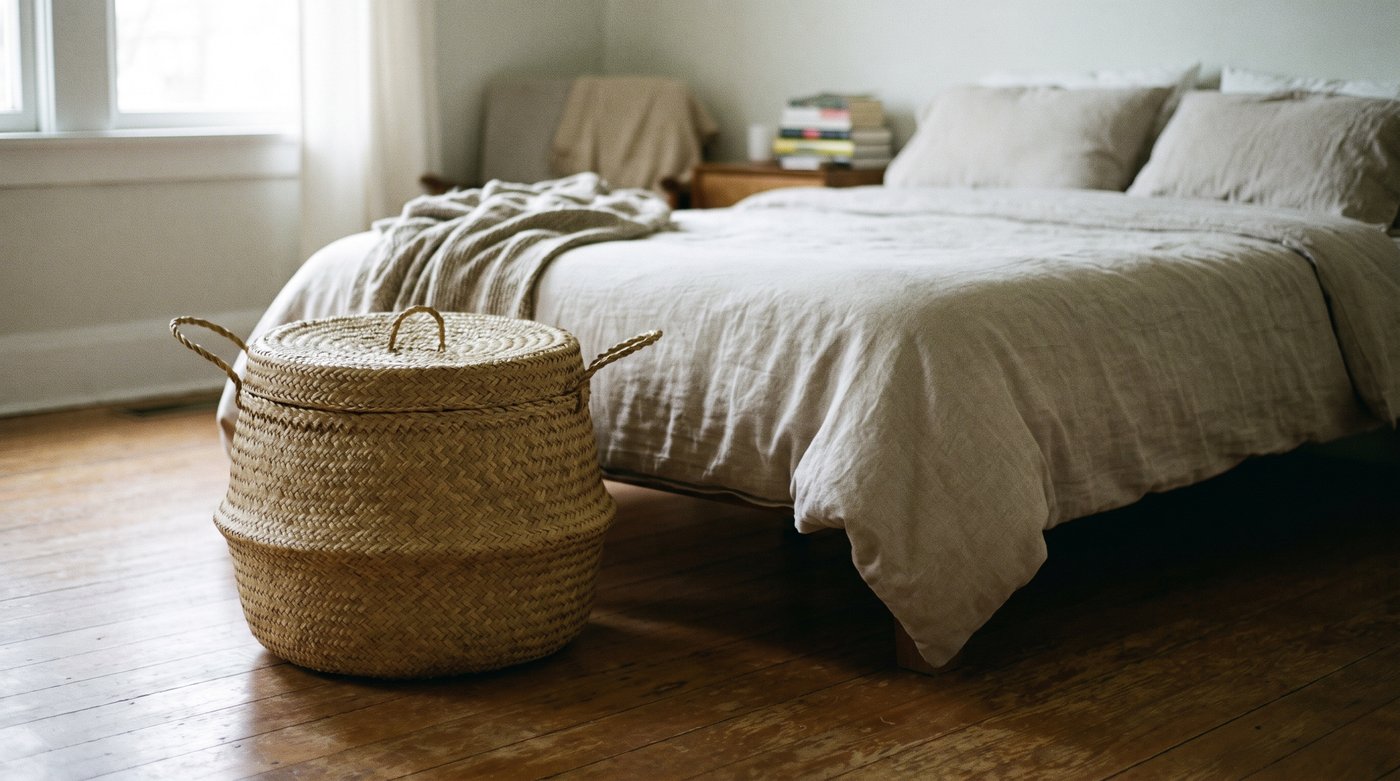
A stack of branded boxes in a bedroom tells every visitor something private. A lidded basket, a drawer, or a plain box with a lid tells them nothing. If the person you are caring for is still hosting friends, still having family over, that difference is not cosmetic. It is most of how the room feels to them.
The same goes for where the open pack sits. Within reach matters more than hidden, but within reach and inside something is usually achievable.
Work out how much you actually need to store
Most people store too much because they order to a schedule rather than to a number. If you have not done it, our piece on how long a case should last walks through the arithmetic. Knowing a case covers 22 days rather than a vague "about a month" changes how much has to sit in the closet at any one time.
For the storage itself, household and daily essentials and bathroom and bedroom safety cover most of what people end up wanting, and caregiver protection has the things that tend to be bought last and wanted first.
Reading further
- AARP's caregiving section has practical material on setting up a home for someone who needs daily help.
- Eldercare Locator, run by the Administration for Community Living, connects you to local services in your own county, including help with making a home easier to manage.
The short version
A week's worth where it is used, the bulk somewhere dry and out of the sun, the label panel kept and taped inside a door, new stock behind old. And a lid on whatever sits in the bedroom.
If you are not sure how much you should be keeping on hand, the arithmetic in how long a case should last takes about a minute, and it usually means ordering less, not more. Questions? Email us at support@savemedical.com.

